
Humidity-Proofing Delaware & Maryland Homes: Flooring & Cabinet Selection for Coastal Climates
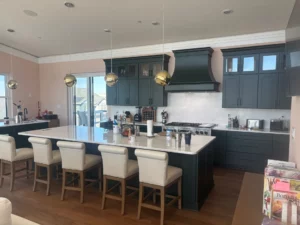
Living in the Delmarva coastal region—from Selbyville, DE, and Fenwick Island, DE, to Ocean Pines, MD, and Salisbury, MD—means enjoying scenic water views and mild sea breezes. However, it also means managing high indoor relative humidity throughout the spring and summer months. Elevated air moisture and salt air can wreak havoc on improper building materials, causing real solid wood floors to cup, particleboard cabinets to swell, and subfloor adhesives to fail. Selecting humidity-proof materials ensures your home remains structurally sound and visually immaculate through every season.
Choosing Humidity-Resistant Flooring Surfaces
Standard materials respond differently when exposed to coastal air and ambient moisture. Selecting engineered or synthetic materials prevents costly seasonal repairs.
- Stone Polymer Composite (SPC) Luxury Vinyl
Traditional solid hardwood expands and contracts as indoor humidity fluctuates, leading to unsightly gaps during winter and buckling in summer. SPC luxury vinyl flooring features a ultra-dense limestone core that is 100% dimensionally stable. It will not warp, shift, or expand, regardless of moisture levels in your home or crawlspace.
- Impervious Porcelain Tile
Porcelain tile offers a near-zero water absorption rate, making it an ideal surface for entryways, mudrooms, and ground-level living areas in flood-prone or humid coastal zones. Tile handles salt air exposure effortlessly without tarnishing or staining.
Selecting Moisture-Resistant Cabinet Materials
High humidity can compromise kitchen and bathroom cabinetry over time if low-grade materials are used.
- Plywood Construction: Plywood cabinet boxes handle ambient humidity much better than particleboard, maintaining structural screw-holding power and door alignment.
- Factory-Applied Baked Seals: Multi-coat polyurethane or enamel cabinet finishes create an impenetrable barrier that stops moisture from penetrating raw wood fibers.
Essential Indoor Moisture Control Tips
Alongside selecting humidity-proof materials, maintaining a stable indoor environment preserves your home’s finishes:
- Keep HVAC Systems Running: Maintain indoor humidity levels between 35% and 55% using air conditioning or whole-house dehumidifiers during peak summer months.
- Use Crawlspace Vapor Barriers: Ensure your home’s foundation or crawlspace has a heavy-duty vapor barrier installed to prevent ground moisture from rising through subfloors.
Experienced Local Installation Services
Proper installation technique is just as crucial as selecting moisture-resistant products. Our installation teams understand the specific environmental challenges of coastal Maryland and Delaware homes. Learn more about our story, service promise, and decades of installation experience on our About Us page.
Protect your property against coastal humidity with high-performance luxury vinyl, custom tile, and all-wood cabinetry. If you are planning a renovation in Rehoboth Beach, Bethany Beach, Berlin, or neighboring areas, stop by our showroom Location to evaluate climate-tested materials with our knowledgeable specialists.